

- July 15,2026
- BY Dr. Murray Fershtman
- 0 Comments
Table of Contents
It’s been a few weeks of summer now, and some Texas parents are noticing something they didn’t see coming. The kid who was “just shy” during the school year is still turning down pool party invites. The one who got stomachaches before every test is still getting them even though there are no tests left to take. If you’ve started wondering whether what you’ve been calling a phase might actually be something else, you’re not the only one asking that question right now.
Here’s the thing about signs of anxiety in children in Texas, they almost never look like what you’d expect. No dramatic moment, no obvious red flag. It’s quieter than that, which is exactly why it’s so easy to chalk up to personality, a rough week, or something your kid will just grow out of.
Sometimes that’s true. Sometimes it isn’t. Here’s how to actually tell.
Why Signs of Anxiety in Children in Texas Are Often Misunderstood
Adults can usually name what they’re feeling: worry, dread, that racing-thoughts thing. Kids often can’t, especially the younger ones. So instead of saying “I’m anxious,” a child’s anxiety comes out as a stomachache, a meltdown, or suddenly refusing to do something they used to love.
And parents read those moments the only way they know how. A kid who doesn’t want to go to a party seems tired, or stubborn, or going through something normal. A kid who keeps asking “what if” seems curious, not anxious. Most of the time, that read is fine, kids are weird and moody sometimes, that’s just being a kid. But when the same pattern keeps showing up and starts actually getting in the way of life, that’s worth a second look.
Learn more on What Parents Need to Know about ADHD Treatment for Children and Teens in Texas
Common Behaviors Texas Parents Mistake for Signs of Anxiety in Children
What Gets Said | What It Might Actually Be |
“She’s just shy” | Social anxiety, especially if it’s getting worse instead of better with age |
“He’s being dramatic” | Real physical anxiety symptoms — stomachaches, headaches doctors can’t explain |
“She’s a picky eater” | Avoidance tied to anxiety about anything new or unfamiliar |
“He’s stubborn about school” | School-related anxiety, sometimes tangled up with separation or social fears |
“She’s too clingy for her age” | Separation anxiety that hasn’t faded on the usual timeline |
“He’s just a worrier, that’s his personality” | Generalized anxiety that’s turned into a daily thing, not an occasional trait |
“She can’t sit still” | Anxiety showing up as restlessness, easy to confuse with ADHD |
Child Anxiety Symptoms Texas Parents Should Actually Watch For
Beyond the patterns above, here’s what tends to show up specifically:
- Stomachaches or headaches that keep happening with no medical explanation
- Trouble falling asleep, or waking up multiple times overnight
- Pulling away from things they used to enjoy: sports, sleepovers, group hangouts
- Needing constant reassurance (“Are you sure? Are you sure?”)
- Meltdowns or irritability that feel way out of proportion to whatever triggered it
- Perfectionism, or real distress over small mistakes
- Asking the same worried “what if” question over and over
- Physical tension: fidgeting, nail-biting, a clenched jaw
- Trouble separating from a parent well past the age where that’s typical
- Going quiet or avoiding eye contact around groups
No single thing on this list means anxiety by itself. It’s about the pattern, how often it shows up, and how much it’s actually disrupting daily life.
Signs of Anxiety in Children Ages 4–10: What Texas Parents Should Notice
Younger kids show anxiety differently than older kids and teens, and this age range gets misread constantly.
Common signs in this age group:
- Crying or tantrums that cluster around transitions: drop-off, bedtime, anything new
- Physical complaints right before school or events, like a sudden stomachache
- Wanting a parent at bedtime well past when that’s typical
- Repeating the same worried question even after you’ve already answered it
- Avoiding new foods, new places, or new people more than seems normal
- Losing a skill they already had, sleeping through the night, being potty trained
For this age range, it usually just gets labeled “difficult” or “a phase”, partly because kids this young genuinely don’t have the words for what’s happening to them.
Can This Look Like ADHD or a Behavior Problem
This one matters a lot: anxiety and ADHD can look almost identical from the outside.
An anxious kid might:
- Struggle to sit still — looks like hyperactivity
- Have trouble focusing because their brain is stuck on a worry — looks like inattention
- Melt down when overwhelmed — looks like a behavior issue
- Avoid things that feel like too much — looks like defiance or laziness
When it’s difficult to tell whether symptoms point to anxiety, ADHD, or both, an ADHD Evaluation Treatment Texas assessment can help identify the right diagnosis. Treating anxiety like it’s ADHD or missing anxiety sitting alongside actual ADHD, means the treatment plan ends up missing the real problem entirely.
Know more about what to do when you Don’t Feel Like Doing Anything: Is It Depression, ADHD, or Anxiety
Signs of Anxiety in Children Affect Families Across Texas
Families around The Woodlands, TX and the greater Houston area are seeing more of this come up, but it’s not something specific to that area, it’s a pattern showing up across Texas and honestly across the country. What actually matters is finding someone who specializes in childhood anxiety specifically, rather than someone doing their best with general training that doesn’t go deep on this.
Families searching for Anxiety Treatment Conroe TX often seek specialized care close to home when these symptoms begin affecting daily life.
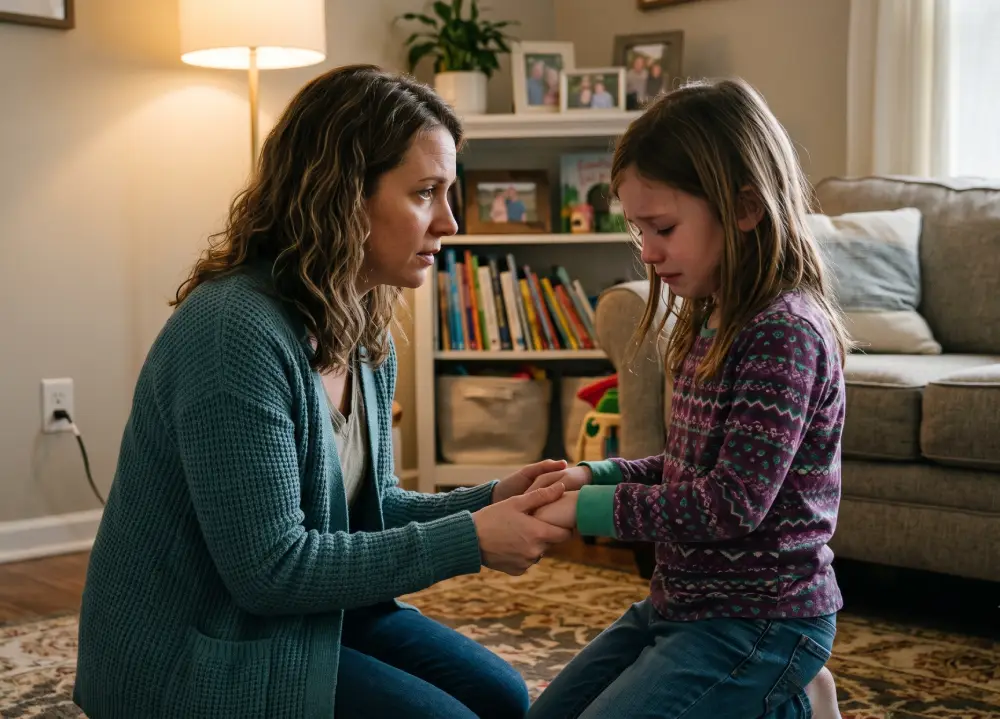
Early evaluation can help your child build healthy coping skills and thrive.
When Should Texas Parents Seek Help for Childhood Anxiety?
A useful way to think about it: some worry is just part of being a kid. Worry that’s frequent, intense, and actually interfering with daily life is a different thing.
Reasons to book an evaluation:
- It’s been going on for weeks, not just a rough stretch
- It’s affecting school: attendance, performance, both
- It’s getting in the way of friendships or activities
- Physical symptoms keep showing up and a doctor can’t find a medical cause
- Sleep keeps getting disrupted
- Your child has actually told you, in their own words, that they feel scared or anxious
- It’s getting worse over time, not better
If a few of these sound familiar, that’s enough reason to stop guessing and actually talk to someone.
The Different Types of Anxiety Disorders Diagnosed in Kids
Anxiety isn’t one single thing, there are a few distinct types that show up in childhood:
- Generalized Anxiety Disorder — ongoing, excessive worry that touches multiple parts of life
- Separation Anxiety Disorder — real distress around being away from a parent, beyond what’s age-appropriate
- Social Anxiety Disorder — strong fear around social situations, judgment, embarrassment
- Specific Phobias — intense fear locked onto one particular thing or situation
- Selective Mutism — consistently not speaking in certain settings despite talking fine elsewhere
- Panic Disorder — recurring panic attacks, less common in kids but it does happen
A proper evaluation is what actually sorts out which one or combination is going on.
Can Childhood Anxiety Go Away Without Treatment?
Anxiety can occur with mild anxiety in children and panic attacks in reaction to a stressful situation. This type of anxiety can reduce and fade as children develop, since they learn better, age-appropriate coping skills. However, anxiety that is persistent and remains untreated is the focus here. Current studies have shown that when anxiety in children is not treated, it is likely to still be present when they are teens and adults. This in time will not reduce. Thus, treatment of anxiety is critical.
Treatment Options for Anxiety in Children in Texas
Families looking for comprehensive Anxiety Treatment Texas services often begin with a thorough evaluation to determine the most appropriate care plan, usually combines a few things, depending on age and severity:
- A real evaluation — the full picture, including anything else going on alongside the anxiety
- Cognitive behavioral therapy — widely considered the most effective approach for kids
- Medication, when it makes sense — usually for moderate to severe cases, carefully monitored
- Working with parents — how to respond at home without accidentally reinforcing the avoidance
- Coordinating with school when anxiety is affecting attendance or grades
FAQs
What are the signs of anxiety in a child?
Something important to consider is the pattern if you are stumbling upon the signs that the person is having Stomachaches or headaches with no clear medical cause, avoiding things they used to enjoy, or having continuous and disruptive irritability, signs that connect to difficulty sleeping, signs of restless worry, or signs that require constant reassurance are the most common of these symptoms.
At what age can anxiety disorder develop in children?
While some anxiety is expected in toddlers, such as separation anxiety, it’s a cause for concern when that anxiety persists into later childhood. Preschool is when many parents notice issues with anxiety, but it becomes more apparent in the ages between 6 and 12 when the child becomes more articulate and specific about the things they’re worried and anxious about.
How do I know if my child's anxiety is serious enough to need professional help?
You should probably schedule an evaluation if it hits a certain threshold. If it gets in the way of school, friendships, or other things in life that are meaningful to you, if it has started to manifest as frequent unexplained physical symptoms, or even if it just gets worse, those should all signal to you something else is off.
Can anxiety in kids look like behavior problems or ADHD?
There are a lot of overlapping symptoms. What could be anxiety could also be seen as ADHD or difficult behavior. The only way to differentiate between the two or say it’s both, is through a proper assessment.
What types of anxiety disorders are diagnosed in children?
Generalized anxiety disorder and separation anxiety disorder social anxiety disorders, anxiety disorders, selective mutism as well as panic disorders are among the most common types. The type that is appropriate for your child is based on the specific patterns of symptoms your child displays.
Does anxiety in childhood go away on its own, or does it need treatment?
Mild, situational anxiety sometimes fades on its own as kids mature. Anxiety that’s more persistent usually doesn’t resolve without help and tends to carry forward into adolescence and adulthood. Getting ahead of it early tends to lead to better outcomes long-term.
How is anxiety in children treated in Texas?
A comprehensive assessment is usually followed by cognitive-behavioral therapy; for cases that are moderate to severe, the use of adjunctive medication is warranted. A good plan also includes parent coaching and collaboration with the school.
If This Sounds Familiar, Let's Talk
If you read through this and recognized more than you expected, that’s worth taking seriously. TX Mental Health Services, led by Dr. Murray Fershtman, provides evidence-based evaluation and personalized treatment for signs of anxiety in children across Texas built around your kid’s actual symptoms and history, not a generic checklist.
📞 Contact TX Mental Health Services today at (346) 589-9977 or email us at
txmentalhealthservices@gmail.com to schedule an evaluation and get real answers.