

- June 9,2026
- BY Dr. Murray Fershtman
- 0 Comments
Table of Contents
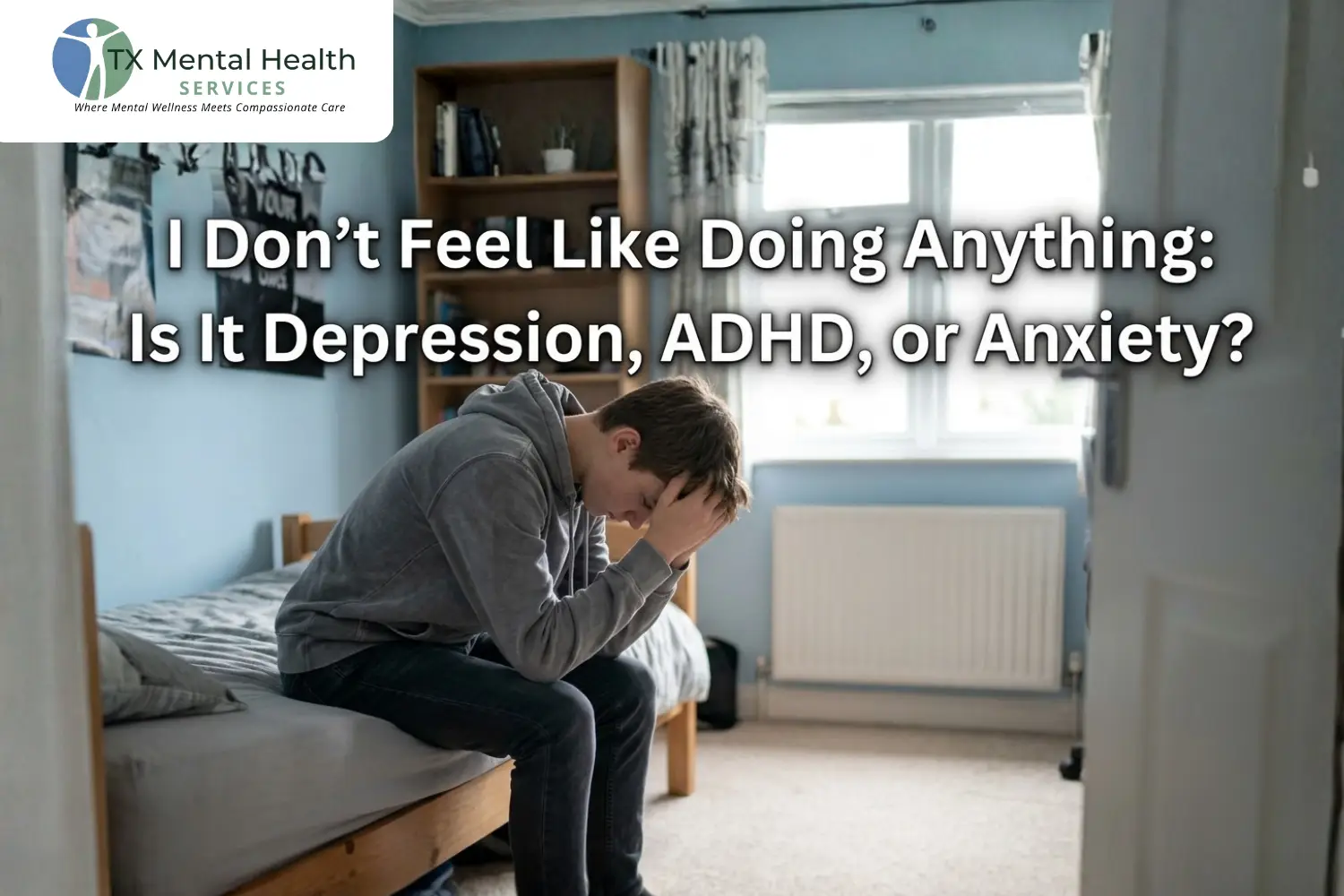
Some feelings are hard to name. It is not sadness exactly, not burnout from overworking more like a switch that stopped responding. You look at the day. Feel empty. Nothing excites you. Not the things you loved before, not the plans you had, not the little things that used to feel easy.
If you’ve been feeling like “I don’t want to do anything” for more than a few days here’s something important to know: this isn’t a problem with you and you’re not, by yourself. With summer starting and the school year finally over many teens and young adults are feeling exactly this way. Instead of feeling free there’s just a quiet emptiness that gets worse the longer it lasts.
Why No Motivation to Do Anything Is Not Laziness
It should be emphasized that motivation does not belong to the set of characteristics inherent to a person’s personality but rather refers to the neurochemical activity involving dopamine, primarily. Any deviation in this process caused by any psychological condition like depression, anxiety disorder, ADHD, etc. would make a person appear lazy. Having no motivation to do anything is one of the most consistent early signals that the brain is under strain, not that the person has stopped trying.
What Could Be Behind It
ADHD and low motivation are closely linked, but the reason surprises many people. It is not about caring, it is about the brain’s ability to generate the chemical fuel needed to start tasks that are not immediately stimulating. This is because an individual suffering from ADHD may spend several hours on something he finds exciting and be completely unable to get started on a normal routine task. It is common for time to fly by without anything being accomplished. Teenage cases of ADHD are generally not diagnosed nearly as often as they should be.
Anxiety is perhaps the least expected answer here, but anxiety and avoidance behavior are deeply connected. When an anxious brain anticipates a task, it does not just see the task it sees every way it could go wrong. In such scenarios avoidance tends to become the brain’s solution for managing that discomfort. The result may look like disengagement, but it is much closer to self-protection. The emotional exhaustion this creates is real and often mistaken for depression.
Has It Gone Beyond a Bad Week?
Emotional exhaustion in teens is consistently underrecognized. These questions help clarify whether something needs attention:
- Has this lasted more than two weeks?
- Is it affecting school, friendships, or family?
- Have they stopped doing things they previously cared about?
- Are they expressing hopelessness about things improving?
Three or more yes answers means it is time to speak to someone qualified — not next month, now.
What Getting Help Actually Looks Like
A mental health evaluation for teens is much easier and less frightening than what you might have thought. The psychiatrist conducts an interview with the teenager and also with the parents, asking about such things as the quality of sleep, mood changes, energy level, concentration ability, and past experiences. This is not meant to be anything invasive or involving some label until a thorough diagnosis is made. It is all about finding out what causes the problems and providing appropriate treatment. When to see a doctor for depression or any mental health concern is clear, if it has been two weeks or more and daily functioning is affected, that is the threshold.
If you feel like saying “I don’t feel like doing anything” all the time, then there is something for you to pay attention to because what you have can either be depression, ADHD, or anxiety. Whatever you have will determine the approach you take to deal with it.
FAQs
Why don't I feel like doing anything?
When you feel this way for more than two weeks and it starts to interfere with your daily life it might be depression, ADHD or anxiety that is the problem, not your willpower. A mental health professional can figure out what is causing it.
Why do I feel like I don't care about anything?
Emotional detachment from things you once loved is a sign of depression. It feels like it will last forever. But the good news is that depression is a condition that can be treated, it is not a change in who you’re.
Why do I feel like I don't deserve anything?
Feelings of being unworthy are signs of depression and anxiety. They are not a reflection of oneself. These feelings can get better with the help.
Why do I feel like I don't know anything?
Difficulty concentrating, slow thinking, and incessant self-doubt are known to be the signs of anxiety, depression, and ADHD but not low IQ. The brain under stress will lose its capability to retain memory and think clearly. Remove the cause and the confusion clears up.
What are the 7 symptoms of major depression?
Sadness or depressed mood, loss of pleasure or interest, changes in appetite or weight, sleep problems, fatigue, poor concentration, and low self-worth or guilt feelings.
Take the Next Step
TX Mental Health Services, led by Dr. Murray Fershtman, provides evidence-based care for ages 4–22 across Texas, specialising in depression, anxiety, and ADHD through secure telehealth. You do not need to have a diagnosis before you get in touch with us. That is what the evaluation is, for. Book your appointment today with our specialist. This is the step you can take to start feeling like yourself again.