

- July 27,2026
- BY Dr. Murray Fershtman
- 0 Comments
Table of Contents
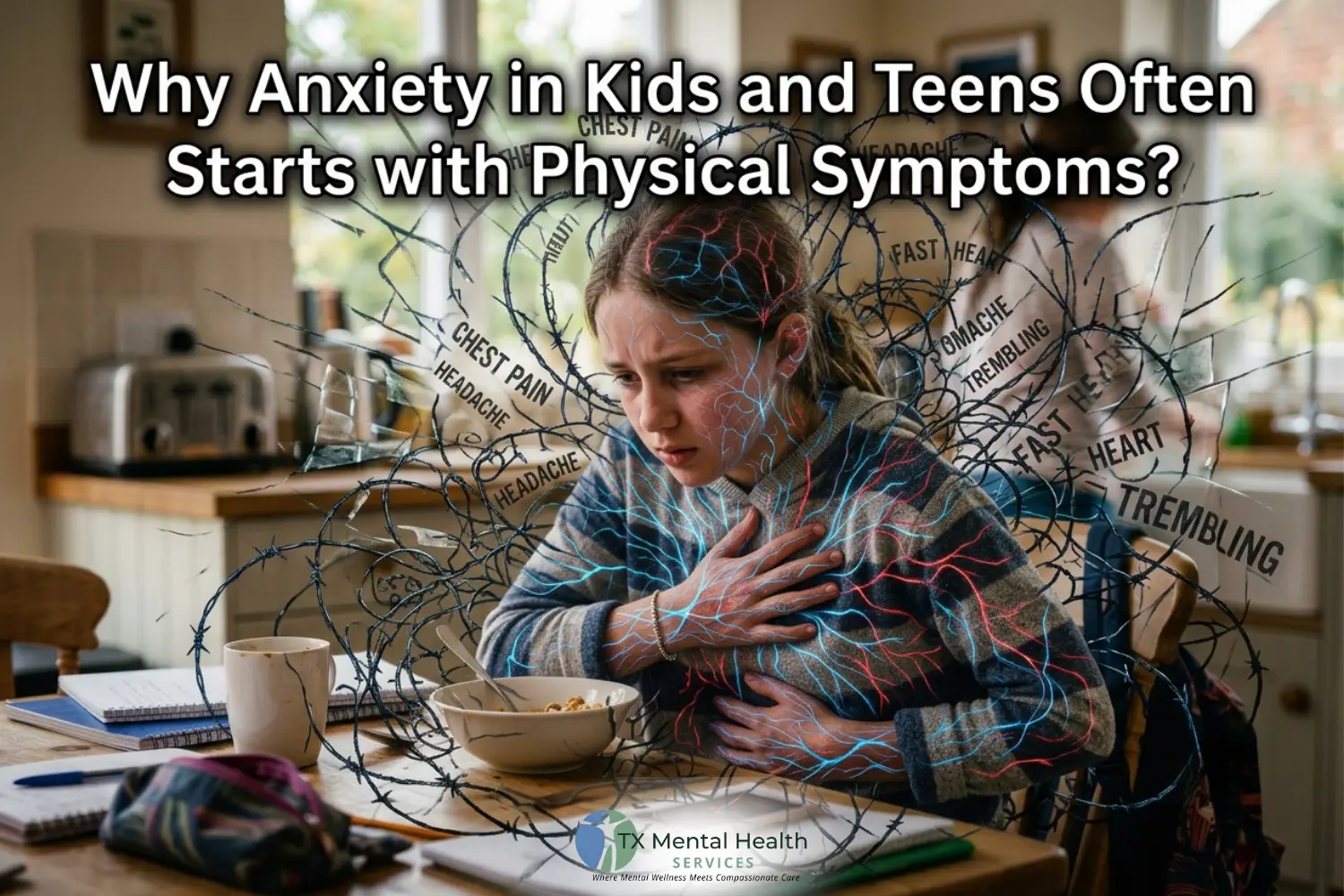
It’s mid-July, and if your kid has already started dreading school again even though it’s still weeks away, you’re not imagining that. Maybe mornings have turned into a routine of stomach complaints. Maybe headaches keep showing up with no fever, no injury, nothing the pediatrician can quite explain. You’ve probably already done the bloodwork, maybe an ultrasound too, and everything came back fine.
That’s usually right around when someone finally says the word anxiety out loud. And it throws parents off, because anxiety isn’t supposed to look like a sick kid except a lot of the time, that’s exactly what it looks like.
Catching the physical symptoms of anxiety in kids early can spare a family months of confusing doctor visits, and honestly, it can help a child feel better a lot sooner too. So let’s get into what’s actually happening here.
Why Physical Symptoms of Anxiety in Kids Happen Before Emotional Signs
Younger kids in particular don’t usually have the words for “I’m anxious” or “this specific thing is scaring me.” So their nervous system ends up speaking for them instead.
Here’s the short explanation: anxiety switches on the body’s stress response the same fight-or-flight system that kicks in during actual danger. That response doesn’t stay confined to the brain. It sends cortisol and adrenaline through the body, which messes with digestion, tightens muscles, disrupts sleep, and speeds up heart rate. The body reacts like something’s genuinely wrong, even when the “threat” is really just a spelling test or an awkward lunch table, not an emergency at all.
This is a big part of why anxiety shows up in the body kids experience so often gets written off as a stomach bug or a “sensitive kid” thing instead of what it actually is.
Common Physical Symptoms Of Anxiety in Kids, Parents Should Know
Every child’s different, but there’s a pretty consistent pattern doctors and therapists see over and over. Some of the most common physical symptoms of anxiety in kids are stomachaches that flare up before school or social plans, headaches with no obvious cause, morning nausea, tight shoulders or jaw muscles, exhaustion that doesn’t go away no matter how much they sleep, trouble winding down at night, a racing heart, or sudden, frequent bathroom trips.
None of these symptoms scream “anxiety” on their own that’s exactly the problem. They look like a dozen other things first.
Learn more about Signs of Anxiety in Children Texas Parents Often Mistake for Normal Behavior
Anxiety vs Physical Illness in Children: How to Tell the Difference
This is usually where parents get stuck, and fairly so. A stomachache is a stomachache, isn’t it? Not necessarily. A few things tend to separate the two.
What to Notice | Leans Toward Illness | Leans Toward Anxiety |
When it happens | No real pattern | Worse before school, tests, social stuff |
How long it lasts | Gone in a few days | Keeps coming back over weeks |
Test results | Show something | Come back clean |
Fever or other signs | Usually there | Usually missing |
Weekends and breaks | No difference | Often gets better |
If your child’s symptoms line up more with that second column, it’s worth having a different kind of conversation not another round of tests.
When There's No Medical Explanation
This is one of the most common situations that brings parents to search for answers in the first place a child stomachache, no medical cause anxiety situation, where the pediatrician has already ruled out anything structural or infectious, but the pain keeps showing up anyway. The child isn’t making it up. The pain is real. It’s just not coming from where most parents assume.
The same goes for headaches in kids caused by anxiety they tend to build over the course of a stressful day, get worse during high-pressure stretches, and quietly ease up during vacations. If your child’s headaches seem to vanish every summer and creep back right before fall, that timing is telling you something.
Anxiety Symptoms in Teenagers: Physical Signs Parents Often Miss
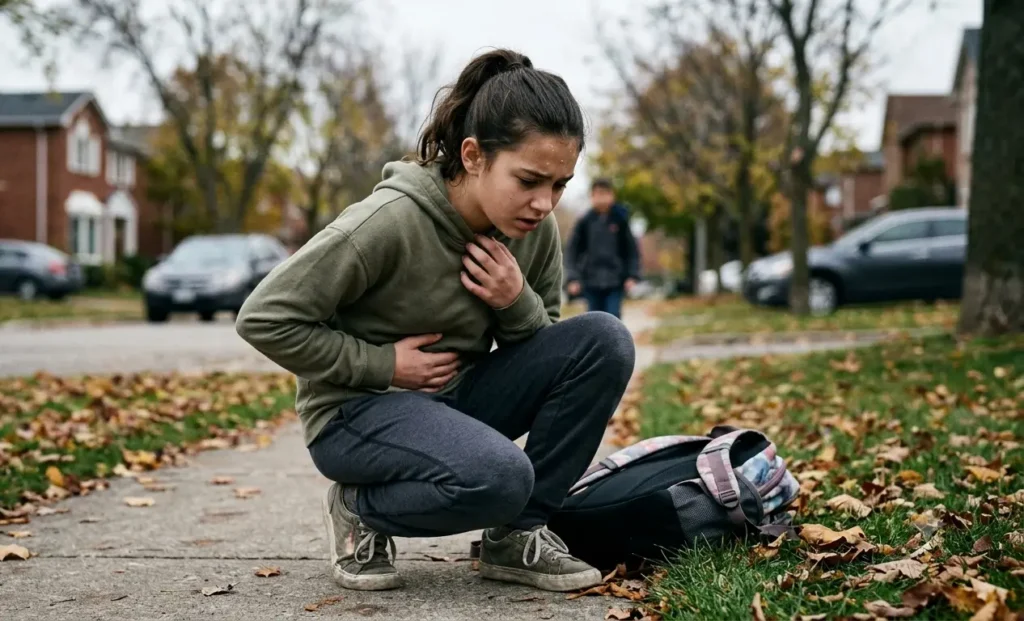
Older kids and teens tend to display anxiety symptoms in teenagers’ physical patterns that are a bit more layered than what you’d see in a younger child. Alongside the usual stomachaches and headaches, teens are more likely to describe a tight chest or racing heart that can feel a lot like panic, noticeable appetite swings in either direction, exhaustion despite getting enough sleep, jaw clenching or grinding at night, or a vague sense of “feeling sick” without anything specific to point to.
Teens are also just better at hiding it. They downplay things, brush off questions, insist they’re fine which makes somatic symptoms of anxiety in adolescents genuinely harder to catch than in younger kids, who tend to say what hurts without much filtering.
Help Your Child Start the School Year Strong
Signs of Anxiety in Children Texas Families Shouldn't Ignore
Between back-to-school pressure, competitive academics, and packed after-school schedules, a lot of Texas families see these symptoms ramp up around predictable points in the year. Some of the more common signs of anxiety in children Texas parents mention are the physical symptoms above, paired with things like refusing to go to school, avoiding new activities, or suddenly becoming clingy right before a transition a new grade, a new team, a new routine.
Know more about what to do when I Don’t Feel Like Doing Anything: Is It Depression, ADHD, or Anxiety
When To See A Doctor For Child’s Anxiety
Knowing when to take a child to a doctor for anxiety as opposed to waiting it out is difficult. As a rough guide, it is probably a good time to reach out when the physical symptoms start to linger longer than a few weeks, medical causes have been ruled out, school or daily activities are being interrupted, and/or the child is exhibiting more anxiety, crying, and/or more withdrawal than the physical symptoms.
Pediatricians are the right first stop. But once the tests keep coming back clean and the symptoms keep coming back anyway, a mental health evaluation is usually the next step that actually gets somewhere.
How TX Mental Health Services Helps Children With Anxiety
Families walk into TX Mental Health Services describing this exact situation more often than you’d think a child with very real physical symptoms, clean test results, and a growing feeling that something else is behind it. Under Dr. Murray Fershtman, M.D., evaluations look at the full picture rather than running through a checklist, since anxiety in kids and teens tends to show up differently depending on age and stage.
Families across the state can access support through Anxiety Treatment Texas. If attention or focus struggles are showing up alongside the anxiety, it’s also worth looking into ADHD Evaluation Treatment Texas, since the two conditions often overlap.
FAQs
Can anxiety really cause stomachaches and headaches in kids?
My child's doctor ran tests and found nothing wrong. Could it still be anxiety?
At what age can anxiety cause physical symptoms in children?
It may begin in pre-school, however it generally is more obvious and more easily identifiable when children reach middle or elementary school.
When should I take my child to a mental health specialist instead of just their pediatrician?
If medical reasons are eliminated and the symptoms continue to impacting school or everyday life, it’s the reason to see an expert alongside the pediatrician and not as a substitute of them.
Does telehealth work for evaluating anxiety in kids in Texas?
Yes, it is effective and is extensively employed for this type of assessment, making it an excellent choice for families that are busy throughout the state.
Get Your Child the Right Support, Not Just More Tests
Treatment is available to children ages four to twenty-two with conditions ranging from anxiety, depression, and ADHD to a number of related disorders. TX Mental Health Services provide evidenced based, mental health treatment for children and adolescents. Under Dr. Murray Fershtman, M.D., individualized care for each child is a particular focus. Contact us today to make an appointment before the pressures of the school year are upon us.