

- September 5,2026
- BY Dr. Murray Fershtman
- 0 Comments
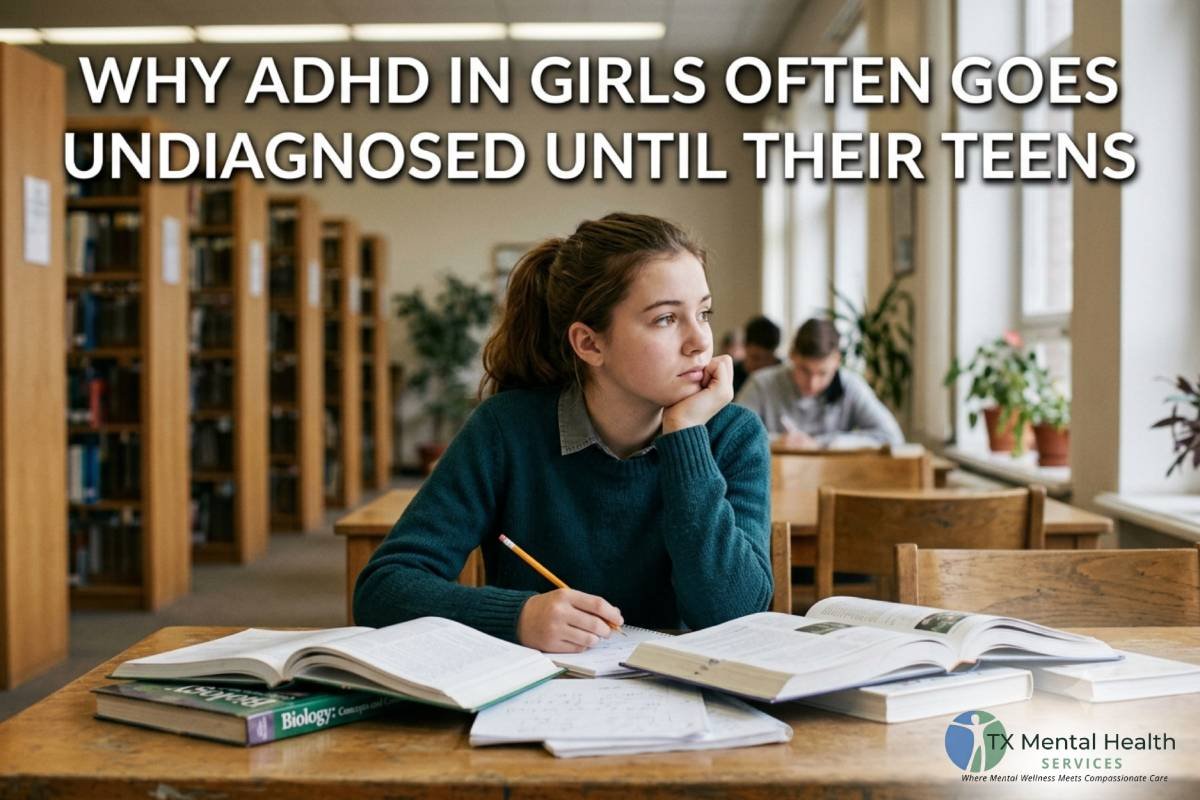
She’s “the daydreamer.” “The quiet one.” The kid whose report card says “needs to focus more” every single semester, but somehow never quite enough for anyone to actually look closer. Sound familiar? A lot of parents don’t put the pieces together until their daughter’s in middle school or high school, suddenly drowning in ways that look nothing like the ADHD they’d pictured in their heads. With school starting back up soon, this feels like a good moment to actually talk about it.
So let’s get into what ADHD in girls symptoms really look like and why so many girls slip through the cracks for years before anybody catches it.
Why Does ADHD Get Missed in Girls So Much?
It’s mostly about the expectations we have. A lot of the initial research that built the foundation for diagnosing ADHD was centered around hyperactive boys. Those boys are the ones that are described in the research as bouncing off of walls, interrupting, and being physically unable to sit still. Girls aren’t like those boys in most cases, so they express their symptoms in another manner.
A few reasons why is ADHD missed in girls keeps happening, over and over:
- Girls tend to internalize their symptoms instead of acting them out loud
- Teachers and parents chalk quiet inattention up to personality, not a real condition
- Girls get really good at masking struggles until the workload gets too heavy to hide it anymore
- There’s this unspoken pressure on girls to “hold it together,” which just delays when anyone notices something’s wrong
Signs of ADHD in Girls vs Boys: Where the Gap Comes From
This comparison makes the diagnostic gap pretty obvious once you see it laid out:
Trait | Common in Boys | Common in Girls |
Hyperactivity | Physical, visible (fidgeting, running around) | Internal — racing thoughts, restlessness nobody sees |
Impulsivity | Interrupting, acting out | Talking too much, big emotional reactions |
Inattention | Gets noticed because it’s disruptive | Easily brushed off as daydreaming |
Social impact | Behavior issues flagged early | Friendship struggles, social anxiety creeping in |
Since girls’ symptoms are quieter and don’t disrupt a classroom the way a boy bouncing out of his seat does, teachers just don’t flag them as often. Fewer flags means fewer referrals for evaluation, and the cycle continues.
Inattentive ADHD in Daughters : The Type Nobody Catches
Inattentive ADHD in daughters is incredibly common, and it’s also the version most likely to get missed entirely. Instead of hyperactivity, you get a kid who loses assignments, zones out mid-conversation, forgets things constantly, and just seems perpetually scattered — but never causes a scene. Teachers love calling these kids “smart but unfocused,” which sounds harmless enough on paper but can quietly mask a real issue for years without anyone digging deeper.
Help Your Child Start the School Year Strong
Early evaluation and the right support can make a meaningful difference this school year.
ADHD Symptoms in Teenage Girls: When It Finally Gets Hard to Ignore
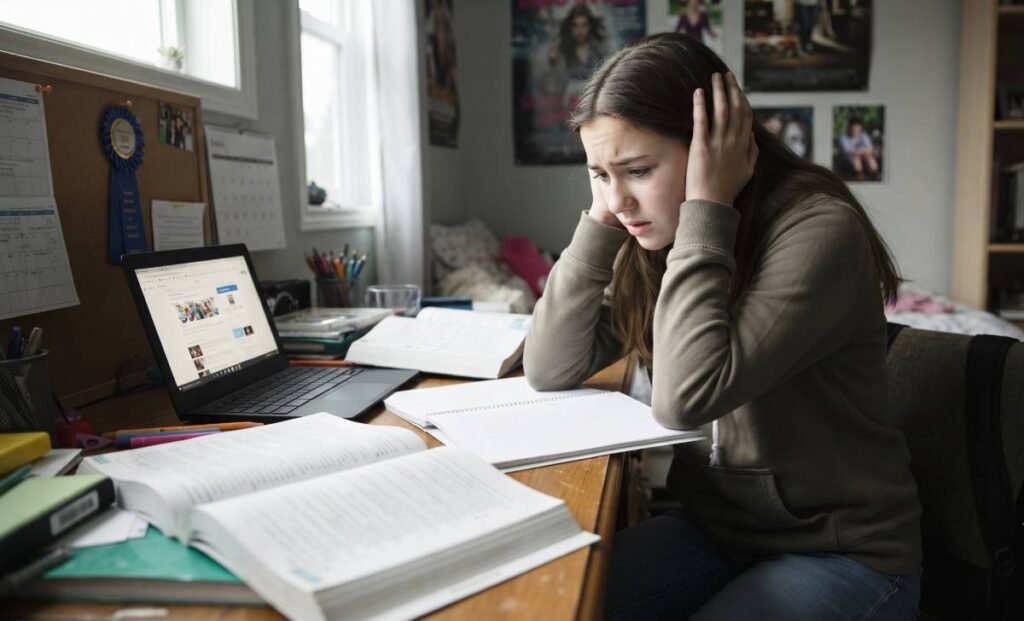
Something shifts around middle school, almost every time. ADHD symptoms in teenage girls tend to ramp up as academic demands increase and whatever coping tricks worked back in elementary school just… stop working. Watch for things like:
- Grades suddenly tanking despite her clearly still trying
- Meltdowns over homework that seem way bigger than the assignment itself
- Anxiety creeping in around keeping up with friends and classmates
- Real trouble managing deadlines or juggling multi-step tasks alone
- Pulling away from activities or friendships she used to actually enjoy
This is usually the point where parents finally book an evaluation — not because they suspected ADHD all along, but because the struggle got too big to keep explaining away as “just a phase.”
Girls ADHD Anxiety Misdiagnosis: More Common Than You’d Think
Here’s where things get genuinely tricky, due to girls’ ADHD being missed, so often anxiety is ‘diagnosed’. After a long time of enduring struggles with no support, it is typical for girls who have not been diagnosed with ADHD to show signs of anxiety. The providers often treat anxiety alone, not recognizing ADHD that is present. If you treat the anxiety, in reality you are treating symptoms while the main cause (undetected ADHD) is continuing to cause other forms of stress.
This overlap is exactly why a real, thorough evaluation matters so much more than a quick checklist. If this pattern sounds familiar already, learn more about [What Parents Need to Know about ADHD Treatment for Children and Teens in Texas] to get a clearer picture of what a full evaluation actually involves.
What an Undiagnosed ADHD Texas Child Psychiatrist Visit Often Uncovers
When families finally bring their daughter in, an undiagnosed ADHD Texas child psychiatrist visit frequently uncovers years of quiet struggle everyone had assumed was just personality, or just anxiety. Parents say the same thing almost every time afterward “I wish we’d caught this sooner.” That’s not on them, though. It just reflects how good girls get at masking these symptoms, right up until life’s demands finally outpace their coping tools.
Does Puberty Actually Make It Worse?
Yes, genuinely this isn’t just anecdotal. Hormonal shifts during puberty can intensify emotional dysregulation, focus struggles, and impulsivity, which is part of why so many girls seem to “suddenly” develop ADHD symptoms in their early teens. Really, though, it was there the whole time. It just got harder to hide once puberty turned the volume up.
ADHD Evaluation for Girls Texas Families Can Actually Access
If any of this is sounding a little too familiar, an ADHD evaluation for girls Texas providers offer usually includes a detailed history, rating scales filled out by both parents and teachers, and a conversation that goes well beyond a basic hyperactivity checklist. A good evaluation accounts for that subtler, internalized presentation that shows up in girls so often.
Real ADHD treatment in Texas should always start with getting the diagnosis right in the first place, because treating the wrong thing anxiety instead of the ADHD driving it rarely fixes anything long-term.
Trust That Nagging Feeling
If you have seen more than simply daydreaming in your daughter and are suspicious that something else is going on, listen to your intuition. There are treatable symptoms of ADHD in girls. The first step in treatment is identification of the symptoms. The biggest challenge to treatment is overcoming the misconceptions that have quieted the symptoms.
FAQs
Why do boys get diagnosed with ADHD more than girls?
Since ADHD symptoms are predominantly hyperactive and boys exhibit more hyperactive symptoms, the symptoms that girls exhibit being more subtle are likely to go unnoticed.
What does ADHD look like in girls compared to boys?
Unlike boys, girls are more likely to show internal restlessness, emotional sensitivity, disorganization, etc. Rather than visible hyperactivity and impulsivity.
Can ADHD in girls be mistaken for anxiety?
Yes, quite often, since anxiety frequently develops alongside or as a direct result of undiagnosed ADHD in girls.
My daughter isn't hyperactive can she still have ADHD?
Definitely. Inattentive-type ADHD doesn’t involve visible hyperactivity, and it’s actually more common in girls than the hyperactive-impulsive type.
At what age is ADHD usually diagnosed in girls?
Girls are typically diagnosed later than boys, often during the tween or teen years once academic and social pressure ramps up.
Does ADHD in girls get worse during puberty?
It can. Hormonal changes during puberty often intensify emotional regulation struggles and focus difficulties.
Where can I get my daughter evaluated for ADHD in Texas?
Licensed child psychiatry providers across Texas offer full evaluations, including telehealth options for added convenience.
Get Clarity About Your Daughter’s Symptoms
TX Mental Health Services, led by Dr. Murray Fershtman, M.D., provides thoughtful, evidence-based ADHD evaluations for ages 4–22 across Texas. Contact us today to schedule an evaluation before the school year gets underway. Call us at (346) 589-9977 or email us at txmentalhealthservices@gmail.com .