

- October 6,2026
- BY Dr. Murray Fershtman
- 0 Comments
Table of Contents
The introduction of ADHD medication may prompt many parents to question the effectiveness of the treatment, its dosage, and what they need to report back to their physician. These are common questions during ADHD Medication Management for Kids.
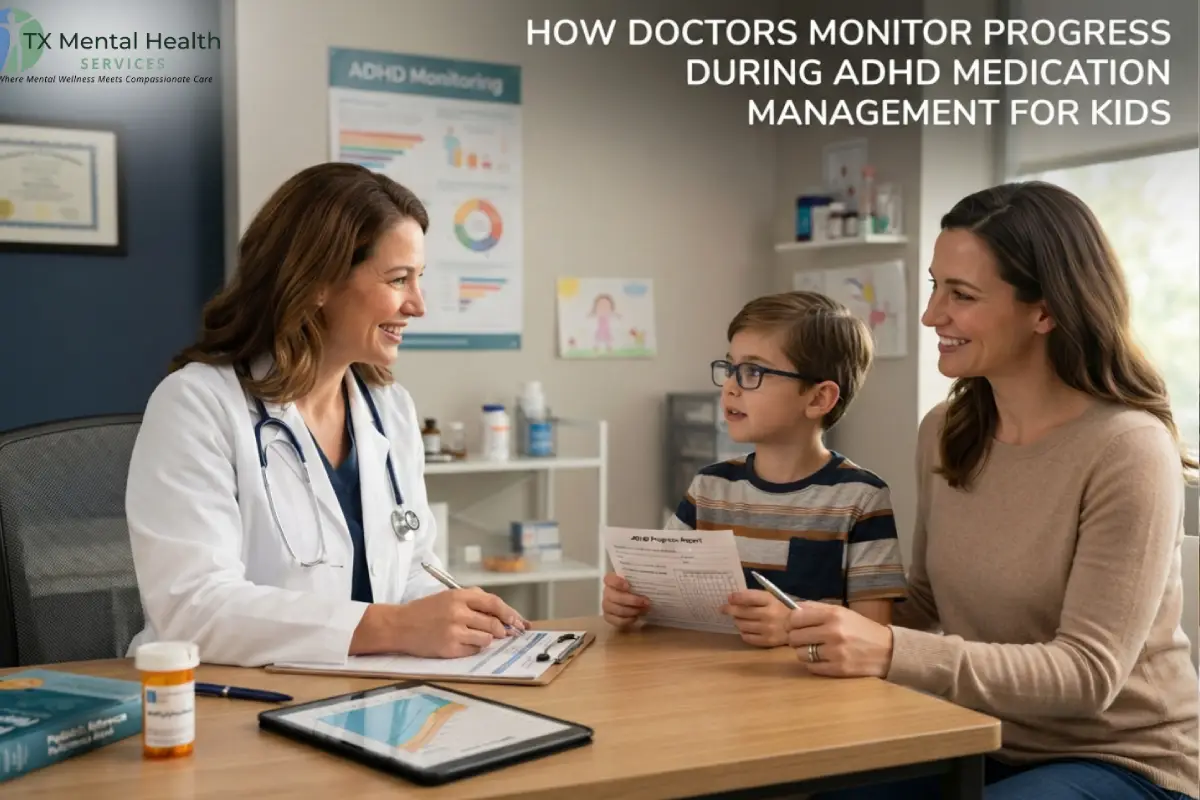
Not only the improvement of ADHD symptoms is being watched by doctors. The following parameters like attention, behavior, functioning at school and at home, side effects, appetite, sleep and other are checked during follow up visits. This monitoring will help to see whether the medication is really helpful or if it should be adjusted.
What Does “Progress” Actually Mean for a Child With ADHD?
Progress doesn’t mean that all the symptoms of the disease disappear. Doctors watch if there are some practical results like improved concentration, performance at school, obeying instructions and fewer impulsive actions both at home and at school.
The type of the medication may influence the definition of the progress too. When comparing stimulant and non-stimulant ADHD medication kids, doctors take into account the effectiveness, duration and possible side effects of the medicine.
The same factors may be taken into consideration while ADHD or anxiety in kids.
What Doctors Check at the First Follow-Up
The first follow-up is an opportunity for parents to explain what they have noticed since medication started. Doctors may ask about:
- Attention and concentration
- Behaviour at home and school
- Appetite and sleep
- Mood and energy
- How long the medication seems to help
Knowing what to expect starting ADHD medication child can help parents prepare for the first follow-up. Prior to the appointment, track attention, behaviour, appetite, sleep and mood changes as well as how long medication seems to be effective. These observations provide the doctor with important data to take into account while examining the child’s response.
How Doctors Tell If ADHD Medication Is Working
Typically, the doctor compares the existing symptoms and functioning of the child with those prior to taking the medication.
That is, the doctor evaluates whether the child is doing things alone now, things that he/she was not able to do prior to taking the medication. The teacher may also see that the child stays more focused and listens better to the instructions.
Parents often inquire about how soon after starting ADHD medications their children will begin to show improvement, but the response may differ based on both the medication and the individual child. Physicians generally expect improvement rather than full remission of all symptoms.
A Simple Way to Think About It
Before treatment, medication initiation, observation, assessment, and modification should be done.
This allows medical professionals a way to determine if the current intervention is effective and further modifications need to be done.
Watching for Side Effects After Starting ADHD Medication
Monitoring ADHD medication also includes looking for unintended changes. Parents need to notice patterns that start after medication starts (or an adjustment in the dose or timing).
Side effects do not always require treatment cessation. But any changes that are ongoing and worrying or indeed troubling should be raised with the prescriber.
Common ADHD Side Effects Parents May Notice
Some children may experience:
- Reduced appetite
- Difficulty sleeping
- Headaches
- Stomach discomfort
- Changes in mood
Understanding the available ADHD medication side effects to look out for can assist parents with giving the doctor factual information about what changed, when it changed and how often it occurs.
When Should Parents Contact the Doctor?
A side effect does not necessitate the cessation of medication. The doctor will then analyze the symptoms and find out whether the dosage needs to be considered again.
Children should not alter or discontinue any medicine without the approval of the healthcare professional.

Need Help Managing Your Child’s ADHD Medication?
Regular follow-ups can help doctors monitor symptom improvement, side effects, sleep, appetite, and overall well-being. Dr. Murray Fershtman at TX Mental Health Services can help families navigate medication management and treatment adjustments when needed.
Monitoring Growth and Physical Health
Doctors also consider a child’s physical health while monitoring ADHD treatment. Depending on the medication and the child’s needs, they may keep track of:
Height • Weight • Appetite • Blood pressure • Heart rate
These measurements are important to inform the healthcare professional of any changes that may need addressing and take into account the total well-being of the child as part of treatment. In those cases, you can do some comparisons based on grades, notes that the parent may leave behind or behavioural change the teacher sees in them. Looking at both sides provides docs with a fuller picture.
NOTE: Parents do not have to log every single thing.
A few useful observations can include:
| What to Notice | What to Record |
| Attention | When focus seems better |
| Appetite | Changes in eating |
| Sleep | Difficulty falling or staying asleep |
| School | Changes in work or behaviour |
| Medication | When benefits seem to start or wear off |
Specific examples can be much more helpful during an appointment than simply saying a child is “better” or “worse.”
When Doctors May Consider Changing the Dose
Dosage can be modified based on two crucial things, namely effectiveness of the medication and tolerance level of the child. In the ADHD Medication Titration Process kids, the prescriber will consider several aspects, like symptom improvement, functional changes, and adverse effects while making a proper dosage modification. It means that the aim is not the minimal or maximal dose, but finding the right balance between the effect and side-effect of the medication.
Parents should never change the dose on their own. Any adjustment should be discussed with the prescribing healthcare professional.
What If the Medication Is Helping but Not Enough?
Sometimes there is an improvement in children’s condition, but there are still some symptoms that influence their everyday activity at school or at home. It doesn’t necessarily mean that the drug treatment hasn’t worked.
Signs the Current ADHD Treatment May Need Adjustment
The doctor may look at whether:
- Symptoms are still affecting daily life
- The medication wears off too soon
- Side effects are difficult to manage
- Improvement is limited
- The child’s needs have changed
What Doctors May Consider Next
The doctor may change the prescription, consider an alternative, or suggest further help depending on the child’s reaction. Families interested in Mental Health Treatment Texas can consult a doctor regarding these matters.
How Often Should Children Go for ADHD Medication Follow-Up?
It varies depending on how the kid responds to the treatment and on whether or not the treatment was just initiated or altered. The child may be seen more often during times when the doctor assesses the response to the medication. Once the treatment has stabilized, follow-ups can be aimed at sustaining results. These ADHD follow up appointments after starting medication also give parents a regular opportunity to ask questions and share observations.
What Parents Should Track Between Appointments
Parents do not have to maintain a very detailed diary. Only a few notes will be useful for the doctor in understanding the response of the kid to the medication and in seeing if there are some patterns.
- School: attention, task completion, following instructions, and class behavior
- Home: schedule, behavior, emotions, and family interaction
- Physically: eating, sleeping, headaches, tummy problems, or any other changes
With the medication: when does it seem to work, how long it works, and when the effect starts to go away
It is always better to describe cases than to just put that kid is “better” or “worse.” And these observations paint a more detailed picture for the healthcare professional to address during ADHD Medication Management for Kids and determine future steps of care.
What Good ADHD Medication Management Looks Like
Proper ADHD medication management entails periodic assessment and not just identifying a suitable prescription drug that seems to be working. Physicians keep on assessing symptom relief, functionality in life, side effects, appetite, sleeping pattern, and general wellness as time goes by in the course of the treatment.
Medication can be just one component of a more comprehensive treatment program. For families seeking to find a proper ADHD treatment for children in Texas, they could consider consulting with a competent medical practitioner.
For parents seeking information on ADHD Treatment Texas, communicating consistently with your child’s healthcare practitioner makes it easier to assess what’s going right and wrong with the treatment.
When Parents Should Look for Additional Help
Medication does not necessarily resolve all the issues that might arise. In case the symptoms of ADHD affect learning, relationships, life at home or daily functioning, it is advisable to have a conversation about other types of treatment with a healthcare specialist.
The resources like When to Seek Help for ADHD Symptoms and When Not to Ignore Them can provide more information on what circumstances require another type of treatment.
It is also useful to know about the types of specialists involved in treating ADHD. Child Psychiatrist vs Pediatrician for ADHD Texas Which Specialist Should You Choose can provide information about their functions.
Key Points
- Doctors will monitor the child’s improvement as well as side effects.
- Parents’ and teachers’ opinions are very important.
- Medication needs to be adjusted according to the response.
- Growth and physical condition should also be monitored.
- Parents should discuss concerns before changing or stopping medication.
For families exploring ADHD Treatment Texas, maintaining regular communication with the child’s healthcare provider can make the treatment process easier to understand and manage.
Choose Ongoing Support for Your Child’s ADHD Care
The effectiveness of ADHD management through medication depends on reviewing any progress made and adjusting the treatment to match the evolving needs of the child.
TX Mental Health Services, a practice managed by Dr. Murray Fershtman, M.D., offers ADHD diagnosis, medication management, and other services for children and adolescents throughout Texas.
For families trying to figure out treatment costs, understanding insurance coverage is important. The article Does Insurance Cover ADHD and Anxiety Treatment for Kids in Texas? breaks down what you need to know about how your plan might help cover care.
Ready to move forward? Reach out to TX Mental Health Services to schedule a free consultation. Call (346) 589-9977 or email txmentalhealthservices@gmail.com.
FAQs - ADHD Medication Management for Kids
How long does it take for ADHD medication to start working in kids?
It can vary from child to child and from medication too. Some kids take days, others two weeks. Your physician will provide you with an overview of what is to come.
What side effects should I look for after starting an overseas medication with my child?
In the early weeks, nausea and different changes in sleep and appetite, irritability, headache and upset stomach may be experienced. In the majority of cases, it will fix itself. If you are worried about something, do inform your physician.
How often will my child need checkups once on the medication?
Initially, there will be more checkups until the right medication is found. Once things are working well, appointments will space out.
What's the difference between stimulant and non-stimulant ADHD medication?
They function in a different manner in the brain and have an individual effect on each child. Your doctor will talk about which one would be suitable for your child.
Does my child require dosage adjustment once they start taking this medication?
Most likely. In case your child does not show sufficient improvement in their symptoms or has side effects, the dosage needs to be changed.
Does the ADHD medicine affect the way my child eats or sleeps?
Yes, it does. Some kids will not eat properly or fail to sleep during the night time. This is only temporary; however, you should keep track of the situation.
What will happen if my child won't react to the first ADHD drug?
It’s quite common. Your doctor will change the dose, prescribe another drug, and even combine the therapy with others.